
How to encourage neighbours to care for the green spaces in their neighbourhood together? Project partner Eco-city set up a dialogue with professionals and active residents and learned that social embedding and material support are crucial.
Within Rewild the City, various streets are getting a major makeover. A considerable amount of additional greenery is being added to the public space. We would like residents to manage this. But how do we ensure they effectively take on this commitment? How do we create the right conditions, and how do we ensure that residents of the Rewild neighborhoods continue to care for the greenery in their street even after this project ends?
Managing green spaces together brings many opportunities. At the same time, there are various pitfalls.
By working together with your neighbours in your area:
• encounters occur and a sense of community develops
• you gradually learn about plant species
• you experience a sense of purpose by contributing to a pleasant neighbourhood atmosphere
• you feel more at home in the neighbourhood
If it is unclear what exactly you are allowed to do in the public space, what support you can or cannot count on, or whom to approach for practical questions without getting caught up in bureaucratic red tape, people lose their motivation, and support for green interventions in the neighbourhood actually diminishes.
The many faces of neighbourhood management
To get an idea of what works and what doesn't, Eco-city spoke with residents and professionals who are committed to the greenery in their neighbourhood in various ways. What motivates them? What kind of support works well? What hinders their efforts? How do they view the objectives of Rewild?
The professionals we spoke with were working on building connections in the neighbourhoods and/or were deployed for their green expertise. Through them, we met various residents. Their levels of engagement varied considerably:
• helping (on a one-time basis) with the creation of vertical gardens in their street
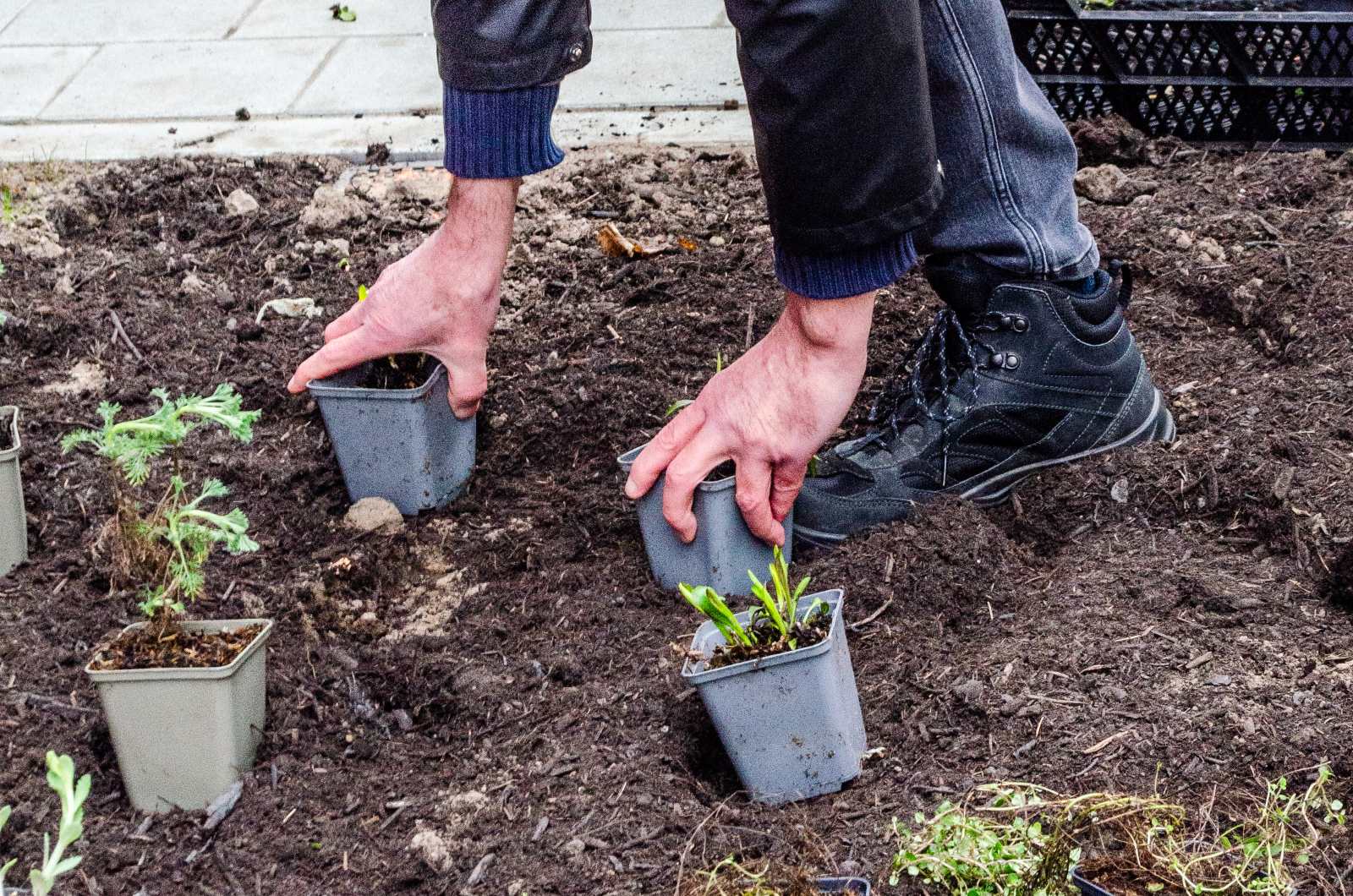
• maintaining planting beds and spaces around trees
• daily management of a community vegetable garden
• helping to set up and maintain a pick-your-own garden
• campaigning for and creating a neighborhood park in their area
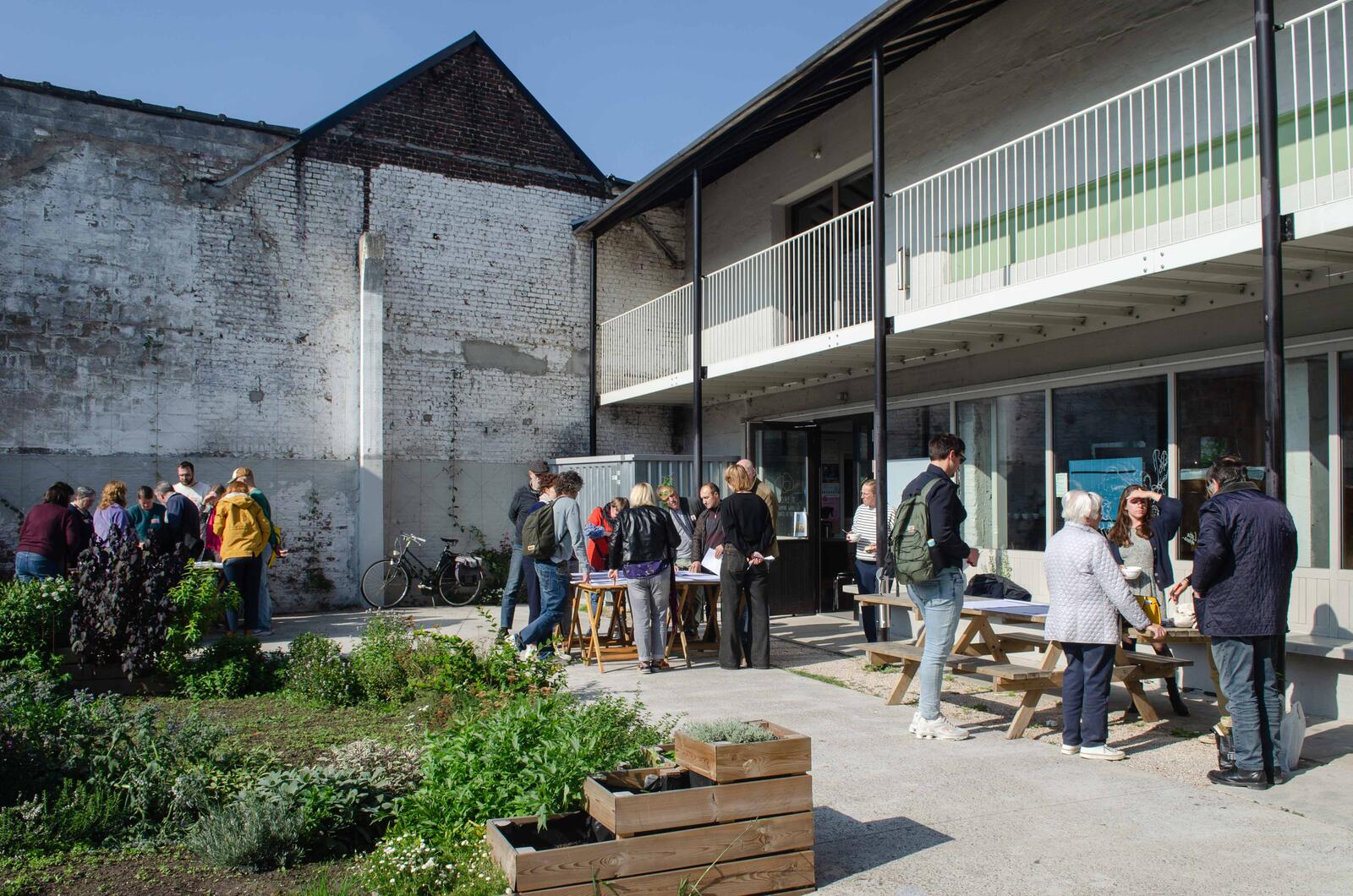
The conversations usually took place at the locations where neighbourhood management activities are carried out in the Ghent neighborhoods of Brugse Poort, Rabot, Bloemekenswijk, Muide-Meulestede, and Nieuw Gent.
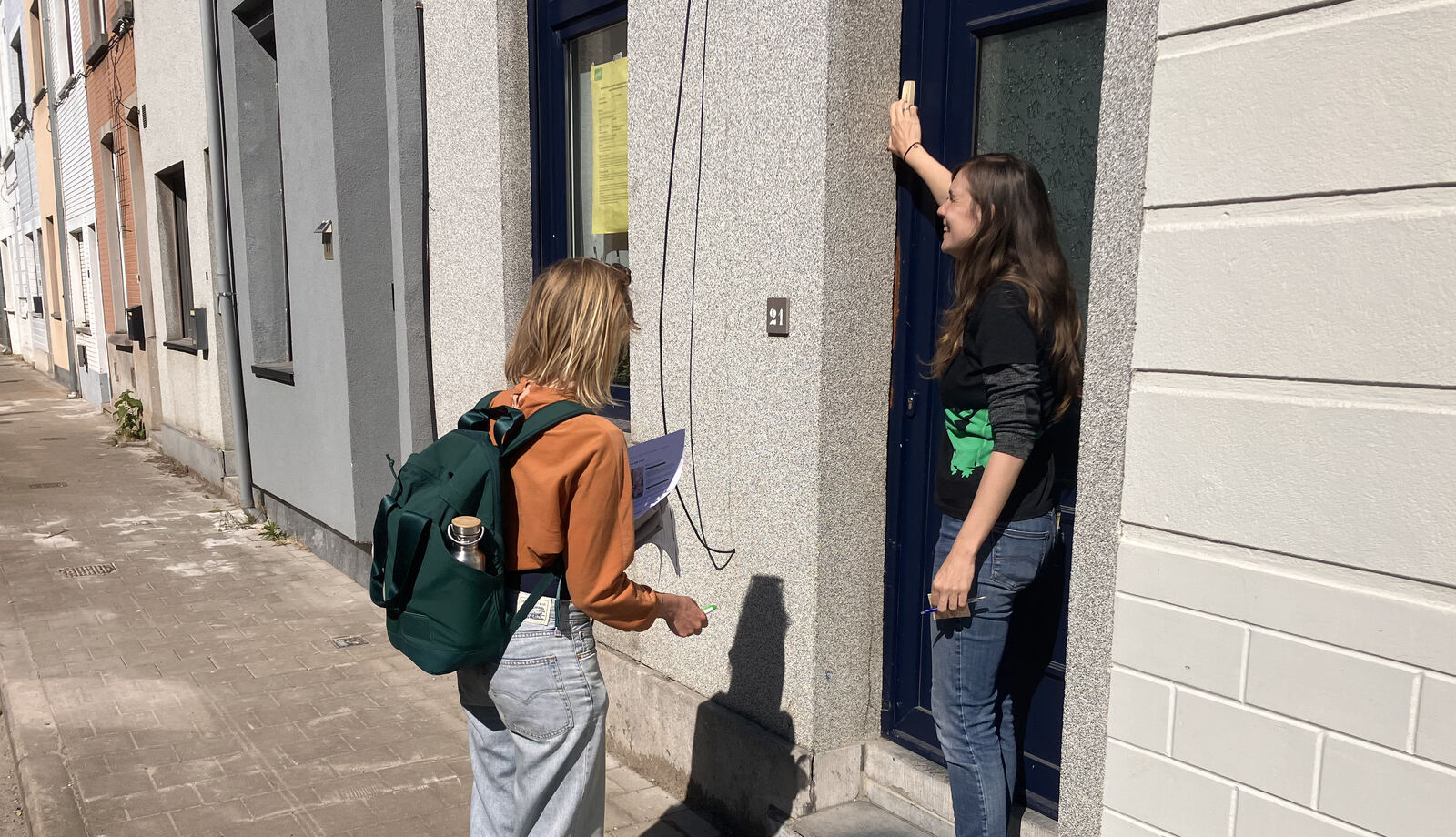
Neighbourhood management is also taken on by residents who are less visible in the city. Therefore, we participated in a number of activities, such as setting up a herb garden and the collection rounds of the clean-up volunteers Propere Pierkes. We also consulted colleagues from Rotterdam who work with 'neighbourhood gardeners'.
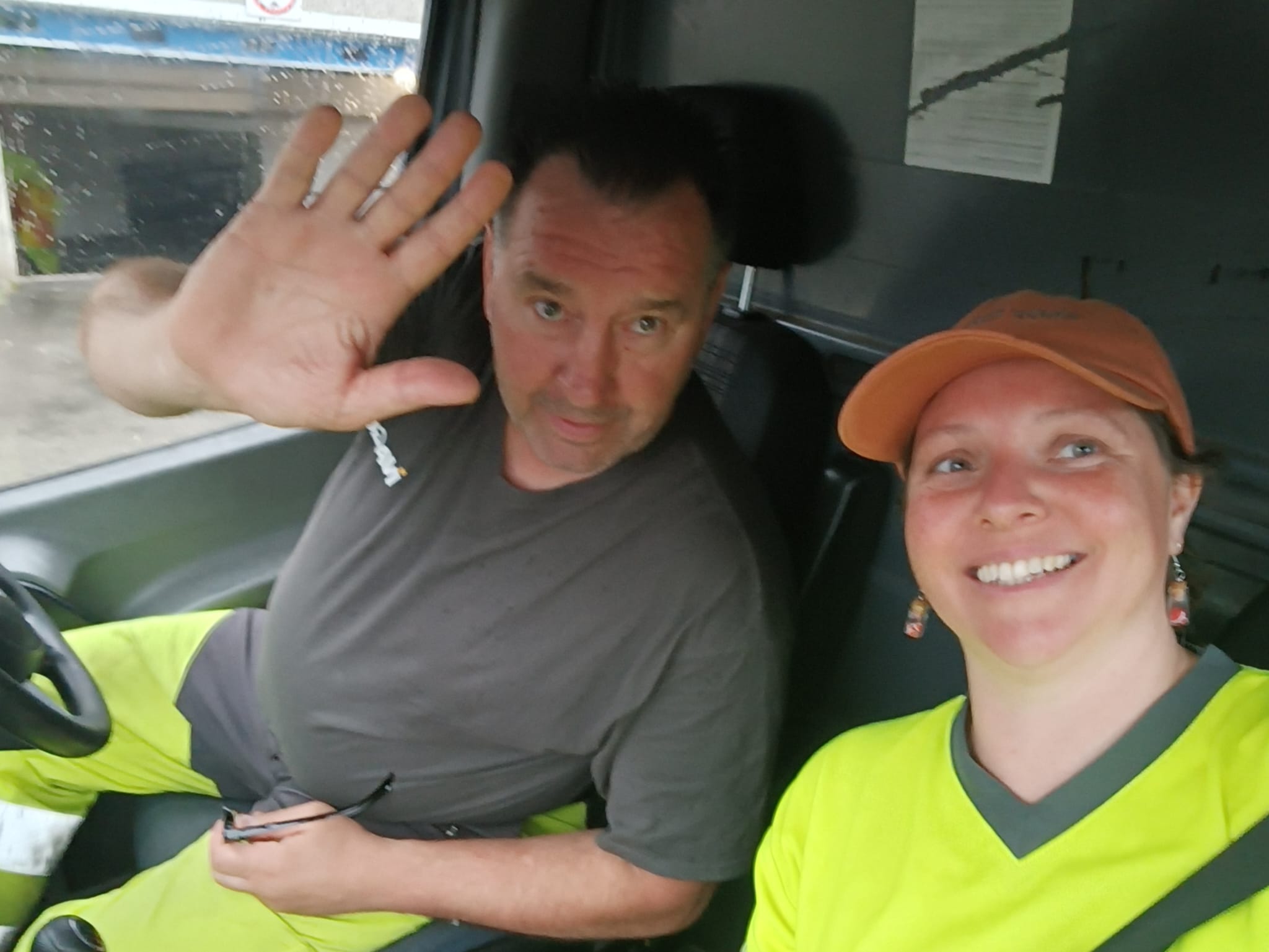
Based on all these conversations, we arrived at a number of 'first lessons for neighbourhood management': cultivate stewardship, focus on flexibility, act action-oriented with a hands-on mentality, and build a collective narrative. This leads to two important conditions for successful neighbourhood management: social embedding and material support.
Cultivating stewardship: building the neighborhood together
People get involved with greenery (in the neighborhood) based on an idea of stewardship: we are collectively responsible for the neighbourhood we live in, and we want it to become greener and more pleasant.
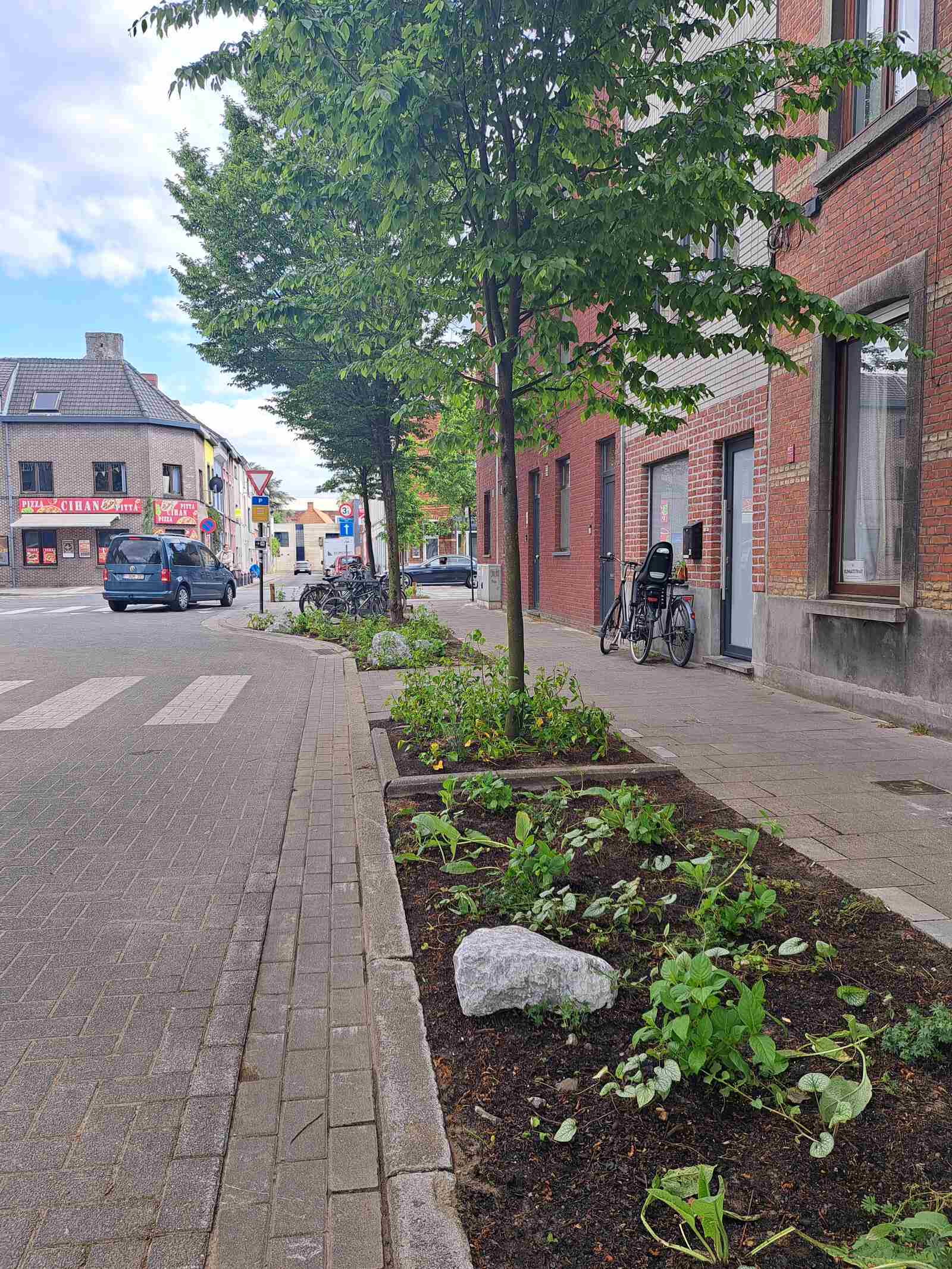
Sometimes residents see the opportunity to connect neighbours in an underutilized location that could use some greenery and a more pleasant atmosphere. To strengthen their initiative, they seek support from neighbours and professionals in the area. Professionals also put certain places on the map as 'opportunities'. They give residents the chance to connect with such a place in various ways. They can help manage it, they can exercise or rest there, enjoy the greenery, ...
Remarkable: caring for the neighbourhood and introducing more greenery don't always go hand in hand easily. More greenery is sometimes seen as contrary to a clean, tidy neighbourhood that everyone takes care of. Or as one engaged resident put it: 'I notice that for some of the neighbours, ‘living in the city’ and ‘greenery’ really don't match. They find leaves, or the spiders in them, dirty'.
That's why it's important to provide social support and social embedding: a community worker who picks up on signals from people who feel unheard, a neighbourhood manager who negotiates between what the neighbourhood needs and what the City wants, a neighborhood-focused green worker who actively rolls up their sleeves to learn by doing what works and what doesn't work in this location, and so on.
Concrete, tangible, and action-oriented
Residents get their motivation for neighbourhood management from working together towards concrete, visible change in the neighbourhood. The support of a flexible professional with a 'can-do mentality' is the key to a successful project.
Or as a community worker explains: 'When a group of people comes with a proposal, you need to be able to respond to it smoothly. Someone in Jasmijnstraat, for example, had the idea to create as many facade gardens with jasmine as possible in the street. Green worker Rik and I picked this up immediately. That means, for example, that I come by with my coffee cart when the neighbours are setting up the gardens.'
'We just started doing it.' We heard this from both professionals and residents. Small, quickly achievable, and concrete projects where residents can 'do what it's about', 'participate', and 'see results' have an effect on sense of purpose, recognition, and trust. Doing things together has the potential to bridge diversity and language barriers.
A community worker: 'There are an incredible number of chance encounters here in the garden. A beautiful example is Leon. Leon stutters. He has a small garden next to Ismaël, who only speaks ‘factory Dutch’. Both have a need to speak slowly, and simple topics brought them joy. Nothing more was needed to make them good neighbours. It was a strange connection that arose by chance. That's what this community vegetable garden does: it offers opportunities for encounters'.
In addition to social embedding, residents here also benefit from material support, such as a (limited) subsidy for a street party where they can award a 'prize for the greenest facade', or a budget from Samen aan Zet (‘It’s our turn’) with which they can buy plants and a wheelbarrow. Prompt collection of pruning waste, litter, and illegal dumping also helps them move forward considerably.
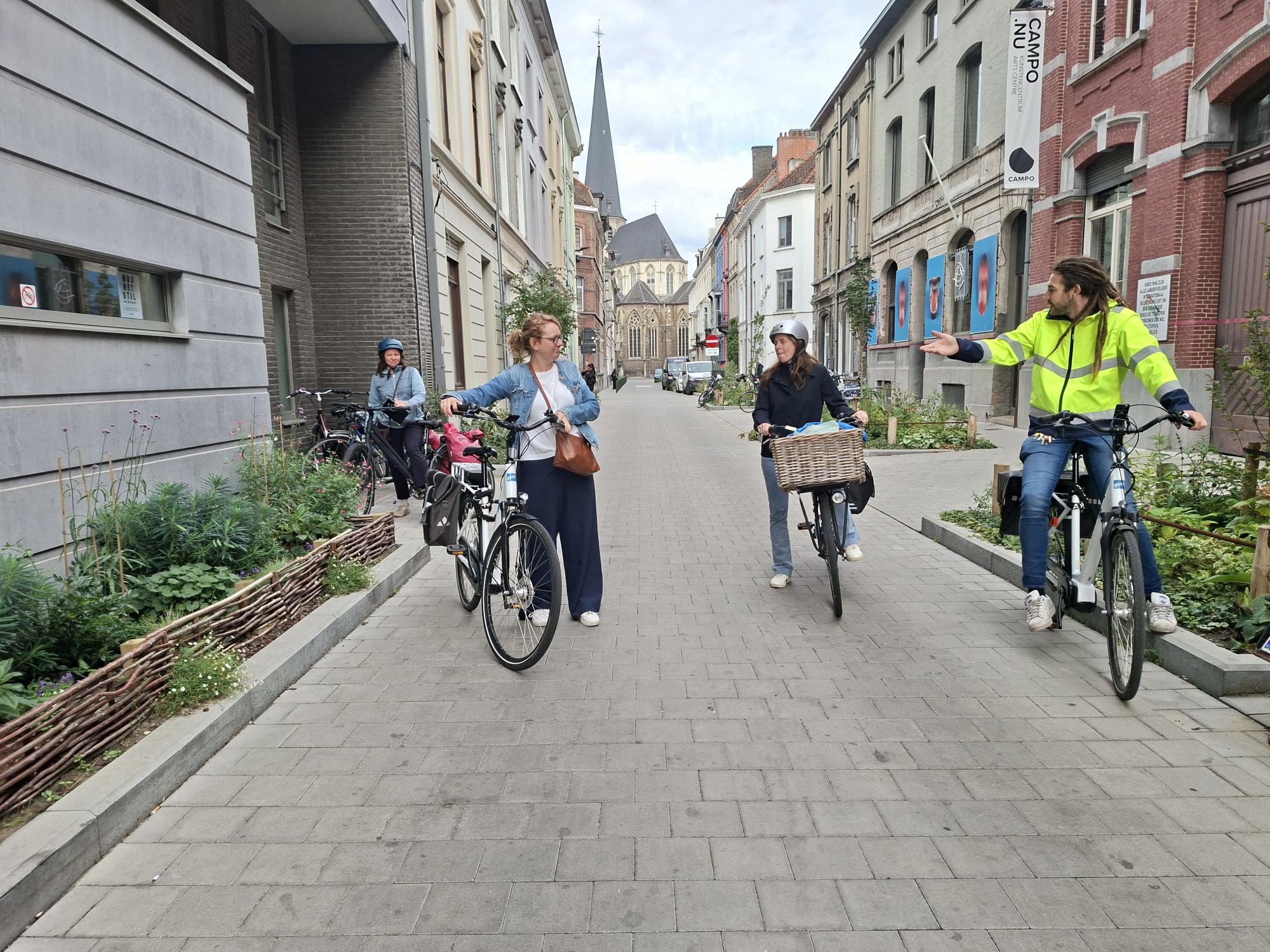
Make the narrative collective
Participation is not a sum of individual opinions. It's about building a shared story in which different neighbourhood residents feel recognized. We must also build such a story around neighborhood management, with an approach that acknowledges the different positions people occupy in their neighbourhood.
The neighbourhood coordinators of the City of Ghent invest a lot of energy in consulting and engaging groups that are less seen and heard in the city. After an information session about street redesign in Ledeberg, we picked up on the signal that social housing tenants feel that neighbourhood management is not really for them: 'It's more something for homeowners'. It's crucial to pick up on messages like these and ensure that the climate-resilient city is truly for everyone.
More information about the research? Contact: anika.depraetere@hogent.be
%20cover%202.jpg)