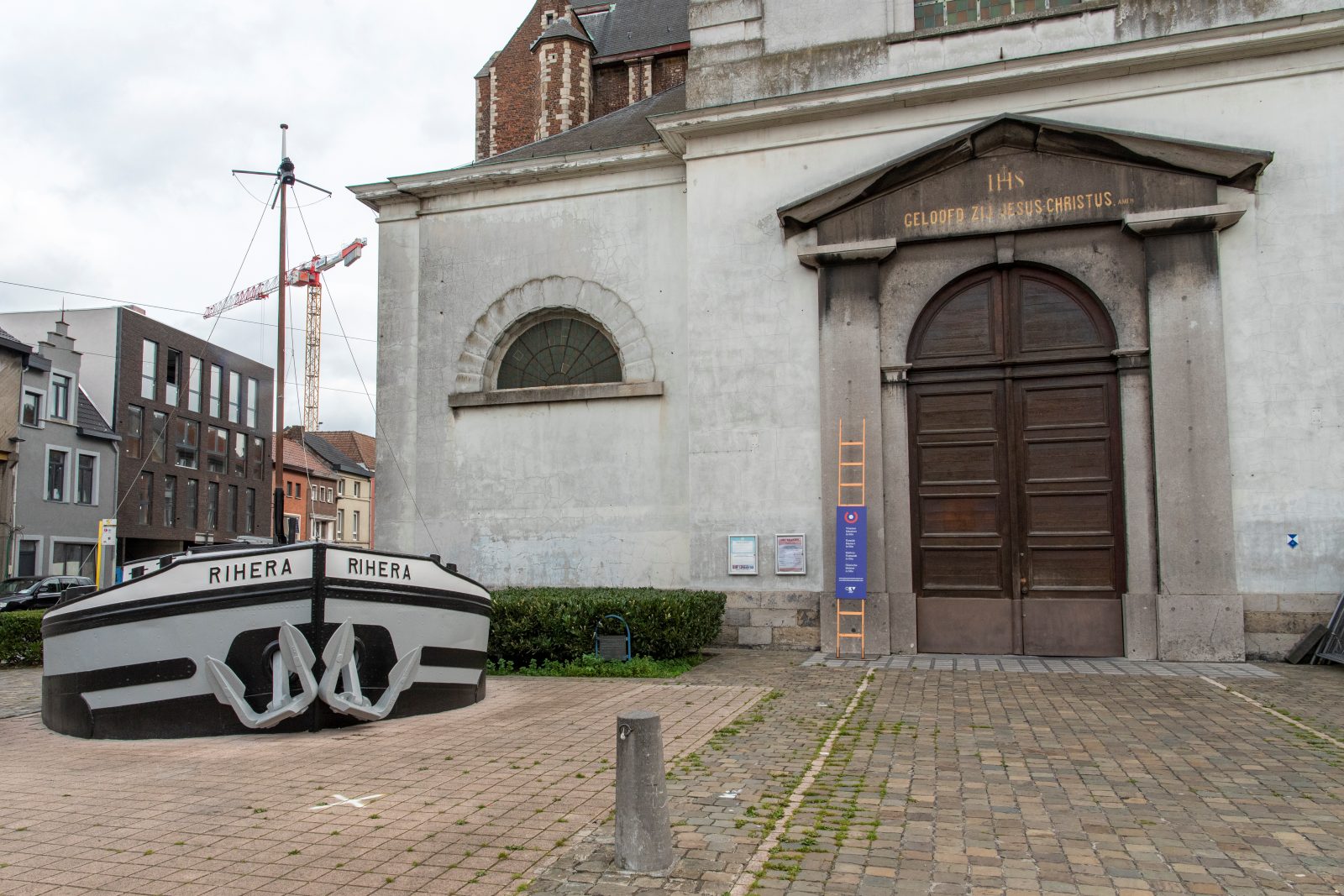
Breaking up asphalt, tarmac and cobblestones in cities might seem easy: take a shovel and start digging. However, desealing regularly causes headaches among policymakers. Beneath the asphalt lies a dense web of policies, regulations and competing interests.
In the first year of the Rewild the City project (an Innovative Action funded by the European Urban Initiative), the City of Ghent, together with the NGO Breekijzer, took on the challenge. They assessed both institutional barriers, which make large-scale desealing so hard, and opportunities for rewilding the city.
The experience in Ghent can inspire other policymakers, city administrations, and practitioners to find answers to one question: what is actually holding us back?
Bridging the gap between policy intent and urban reality
As the effects of climate change increasingly become visible, ‘feelable’ and evident, adapting to rising temperatures, droughts, floods, etc. becomes a central issue for urban areas across Europe.
Sealed soil, land that is covered with impermeable surfaces like asphalt, tarmac and cobblestones, is a key feature of urbanisation. However, it has important effects on the ecosystems and local climates. Sealed soil increases the urban heat island effect (heat being ‘trapped’ in densely built environments), it reduces water infiltration into the soil, and weakens natural ecosystem functions. In recent years, numerous European policy frameworks1 have been launched to support the desealing and green adaptation of urban areas.
Despite ambitious long-term visions, everyday institutional practice still leans towards soil sealing, rather than ecological restoration. At the same time, opportunities to rewild and restore ecosystem functions are often overlooked, thereby revealing a disconnect between strategic intent and urban reality.
Different functions, regulations and underground systems (after all, the sewage system and other infrastructures have to be somewhere) make desealing a riddle for public administrations. This creates a dilemma: “Two or more competing goals,such as stakeholder interests and related strategies, which potentially fail to achieve their aims.” 2
To address these urban dilemmas, local public administrations need to identify the complexity by mapping and understanding the connections between competing policy goals and interests and by working with this complexity, rather than avoiding it.
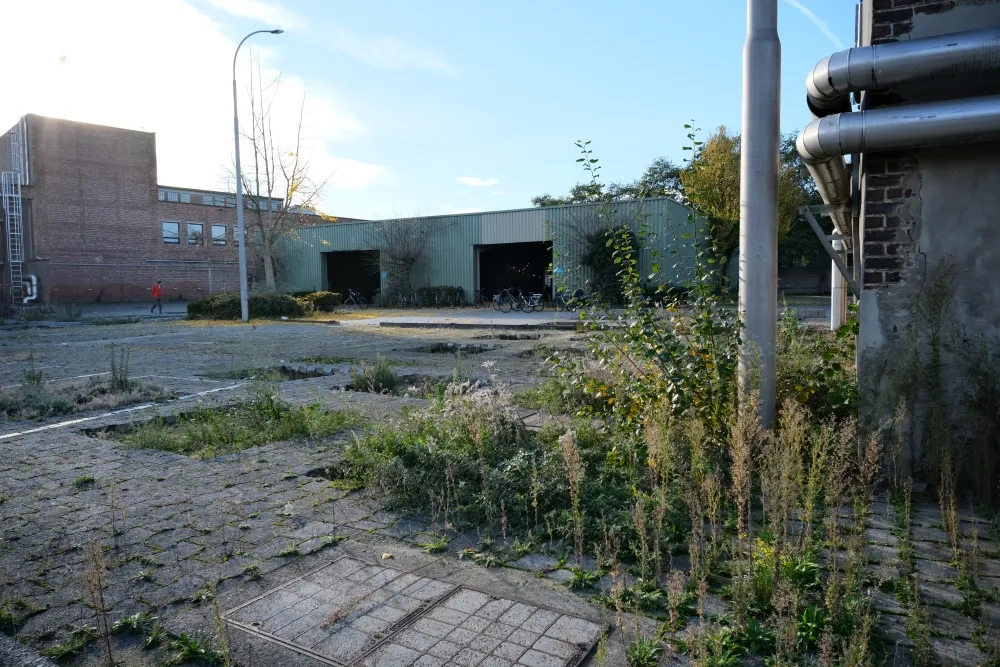
The dilemma of institutional barriers for desealing
In its first year, the Rewild project has been working on unfolding the dilemma of soil sealing in Ghent. Anton Christiaens and Marlies Declerck of the NGO Breekijzer (the Dutch word breekijzer translates to crowbar in English: an essential tool to break up sealed surfaces), together with Linde Vertriest and many more colleagues of the City of Ghent took on the challenge. The result: the Rewild Action Agenda to tackle institutional barriers for desealing.
The Rewild Action Agenda collects a long inventory of all the barriers and opportunities identified in Ghent. The team used a dedicated framework to structure the inventory, which helped participants to think systematically about different types of barriers and opportunities. This framework connects factors such as the phase of the project cycle, levels of authority, spatial context (public and private), and a focus on both desealing and avoiding new sealing. During the workshops, this framework was particularly useful in identifying a wide range of hurdles and opportunities in a more specific and differentiated way across services and contexts. The inventory was compiled through workshops with all concerned city services, bilateral consultations, and written contributions. The result is a detailed picture of where action is possible and where institutional constraints remain. After that, the team translated the structured inventory into concrete action points.
“By tackling these systemic errors, we want to avoid unnecessary soil sealing, create awareness for the problem within the city administration and avoid future lock-ins. This exercise helped us to pinpoint where we need to take action and prioritise those actions. The inventory is not complete, but the methodology can easily be repeated over time, with different services if needed,” says Linde Vertriest.
From barriers and opportunities to an action agenda to innovations
At the end of the process, the team has identified and agreed on six of the most promising barriers and opportunities that will be addressed throughout 2026. It is an ambitious challenge to make significant progress on these barriers over just 12 months, but the project team is motivated to take a big leap forward on each of these points:
1. Rethinking fire safety rules: Strict requirements for fire access often lock streets and squares under asphalt and tarmac. Compared to other cities, Ghent has strict regulations in place that support soil sealing to secure easy access for fire trucks. Rewild is looking beyond its borders to other cities, comparing local rules and seeking ways to balance safety with more flexible, greener surfaces.
2. Unlocking space for urban green by changing parking policies: Rewild is exploring smarter and more innovative approaches to parking, including public-private partnerships for shared and clustered parking, adjusted standards, and resident permits to see which options open up space for desealing and which keep it firmly paved.
3. Utility works as hidden opportunities: Every repair job in the street is a chance to rethink the street space. By embedding rewilding into utility projects, the Rewild team hopes to turn routine street maintenance works into small wins for bringing back nature to the city.
4. From fluffy visions to clear policy: Cities love ambitious plans, but without measurable targets, they stay on paper. Ghent is exploring how to turn long-term desealing goals into a SMART, enforceable framework that guides everyday decisions.
5. Learning from those on the ground: Public services working in the streets often spot opportunities for desealing and rewilding early on. The City of Ghent aims to make knowledge exchange a routine part of city work, one way to do this that is currently explored is the creation of a shared platform for ideas and insights for rewilding.
6. Soil sealing that can be undone: Some surfaces must stay paved for now, but they don’t have to stay that way forever. Rewild will research temporary and reversible urban designs, so today’s decisions and requirements do not block tomorrow’s realities.
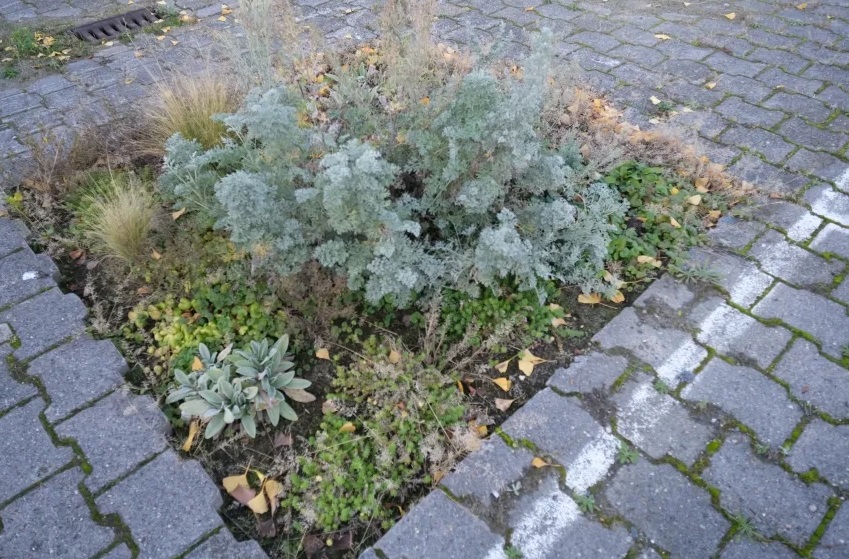
A blueprint for organising a process to identify institutional barriers
“Each local public administration facing challenges with desealing could benefit from a similar approach to the one we used in Ghent,” says Anton Christiaens, reflecting on how Rewild's experience can assist others in overcoming obstacles related to desealing, preventing further sealing, and promoting rewilding.
The REWILD team has developed a six-month process designed to uncover institutional barriers, to choose a limited number and make sure to develop an action plan on how to address them. These experiences are now a blueprint for other local public administrations to follow a similar process:
For cities and towns looking to replicate, the Rewild team suggests beginning with a clear, structured process that follows these core elements:
• Step 1: Form a core group: Bring together colleagues across different city departments that have a stake in desealing activities and policies to start a discussion and identify barriers, establish a common understanding and a common definition of institutional barriers.
• Step 2: Organise workshops in a broader group: Rewild brought together a broader group across departments in two workshops: One dedicated to barriers and opportunities to open up sealed areas and another one dedicated to preventing new soil sealing. In the workshops, participants were asked to think about different barriers and opportunities according to the following typology:
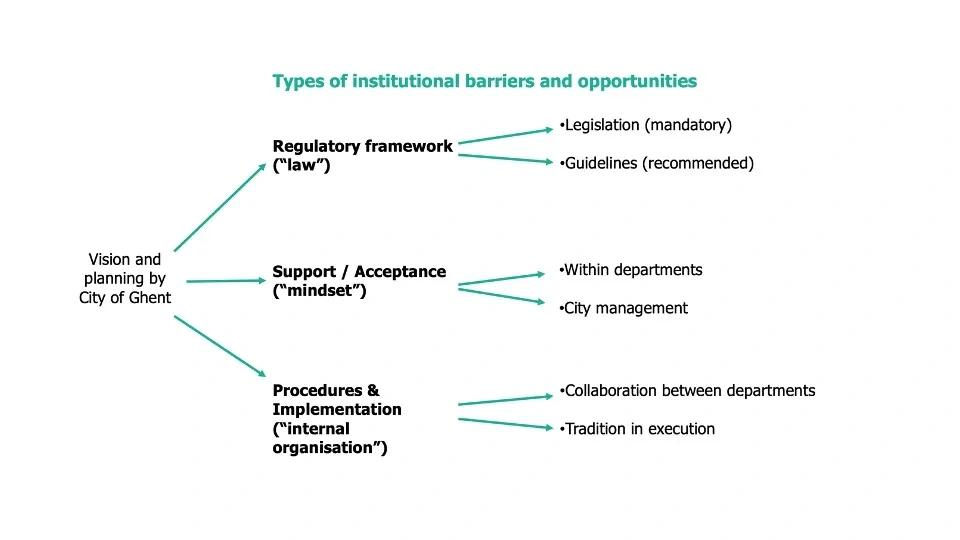
• Step 3: Process the long-list: Following the workshops, the Breekijzer team compiled the results of the two workshops in a longlist and characterised the barriers and opportunities.
• Step 4: Vote for actions with the highest impact: Each member of the core group received an online form to vote for the actions that, to them, needed to be addressed that might result in the biggest impact and potential results within Rewild. The results defined the order in which the barriers should be addressed.
• Step 5: Discuss the long-list in the core-group and choose: The team met again in the core-team and made a selection of six institutional and opportunity barriers that will be addressed starting in 2026. During the exchanges and discussions, the order of the list was changed: it proved very important to hear each other's arguments why (not) to choose a certain action. These were chosen according to the following principles:
A. Diversity in the types of barriers and opportunities addressed: The selection had to consist of: a. different types of institutional barriers and opportunities; b. (at least) one innovation with an impact on the privately owned land; c. (at least) one innovation with an emphasis on avoiding new sealing; d. both barriers and opportunities (at least two of each)
B. Support from the (involved) city departments and the city's executive team to tackle the barrier/opportunity in 2026
C. Potential as a "promising innovation" within Rewild: a. feasibility of testing an innovation within Rewild; b.) possible relation to existing/ongoing projects and initiatives within the city of Ghent
• Step 6: Select a limited number of barriers first: those which would be the low-hanging fruits, yet potentially most impactful. Develop an action agenda targeting those points.
Every city and local public administration is different. If you would like to know more about the process to translate it to the needs of your city, feel free to get in touch with the Rewild Team:
• Marlies at Breekijzer: marlies@breekijzer.be
• Johannes Riegler (EUI expert): johannes@anthropocene.city
What’s next?
The analysis and mapping the Rewild team conducted during the first year of the project are the basis for further work and exploration. Time is running, as the team aims to address the selected barriers and opportunities throughout 2026.
The Rewild Action Agenda lays the groundwork for the work ahead. As the team is set to tackle the identified barriers and seize opportunities throughout 2026, the clock is ticking.
We will return to the subject in future articles. Make sure to follow the project on this website and on Portico.
Rewilding the city starts long before the asphalt is removed
The City of Ghent’s experience shows that desealing and rewilding are more than the actual physical removal of asphalt, but about navigating a complex combination of regulations, competing interests, and practices. The Rewild project demonstrates that working with these urban dilemmas, rather than around them, is key to unlocking space for urban transformations and, thus, for nature in the city.
The experiences of the Rewild team offer a blueprint for other cities seeking to identify both the institutional barriers holding them back and the opportunities already in place for desealing. The City of Ghent and the REWILD team show how important asking crucial questions, like “what is holding us back?”, is to (de)pave the way towards a greener, more resilient urban future.
Footer
1 For example:
- EU Nature Restoration Law (Article 8 is dedicated to urban areas): https://environment.ec.europa.eu/topics/nature-and-biodiversity/nature-restoration-regulation_en
- European Commission. (n.d.). Nature restoration regulation. European Commission. https://environment.ec.europa.eu/topics/nature-and-biodiversity/nature-restoration-regulation_en
- European Commission. (n.d.). EU Mission on Adaptation to Climate Change. Research and Innovation – European Commission. https://research-and-innovation.ec.europa.eu/funding/funding-opportunities/funding-programmes-and-open-calls/horizon-europe/eu-missions-horizon-europe/adaptation-climate-change_en
2 JPIUrban Europe (2019) Strategic Research and Innovation Agenda 2.0. https://jpi-urbaneurope.eu/wp-content/uploads/2019/02/SRIA2.0.pdf

%20cover%202.jpg)